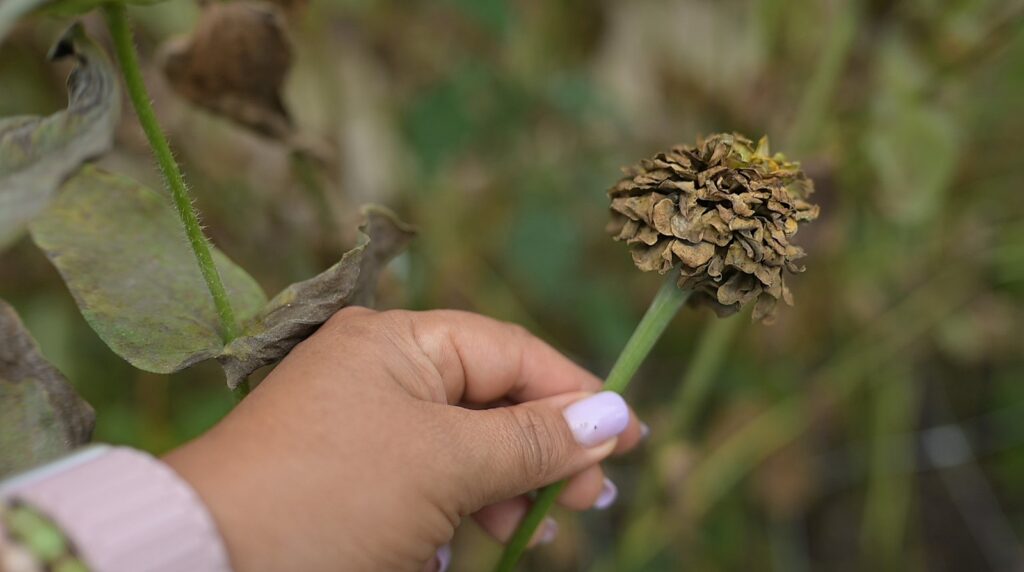
In order to save zinnia seeds, I let the zinnia heads dry until they’re completely brown and crispy on the plant, snip them into a brown paper bag, and pull the seeds out later on a dry day. Keep only the seeds that feel hard and strong, because the bendy ones are empty. And mark your favorite blooms now, while they’re still pretty, so you know which ones to come back for.
Disclosure: Some links in this post are affiliate links for products and garden gear I use. If you buy through them, I may earn a small commission at no extra cost to you. As an Amazon Associate, I earn from qualifying purchases.
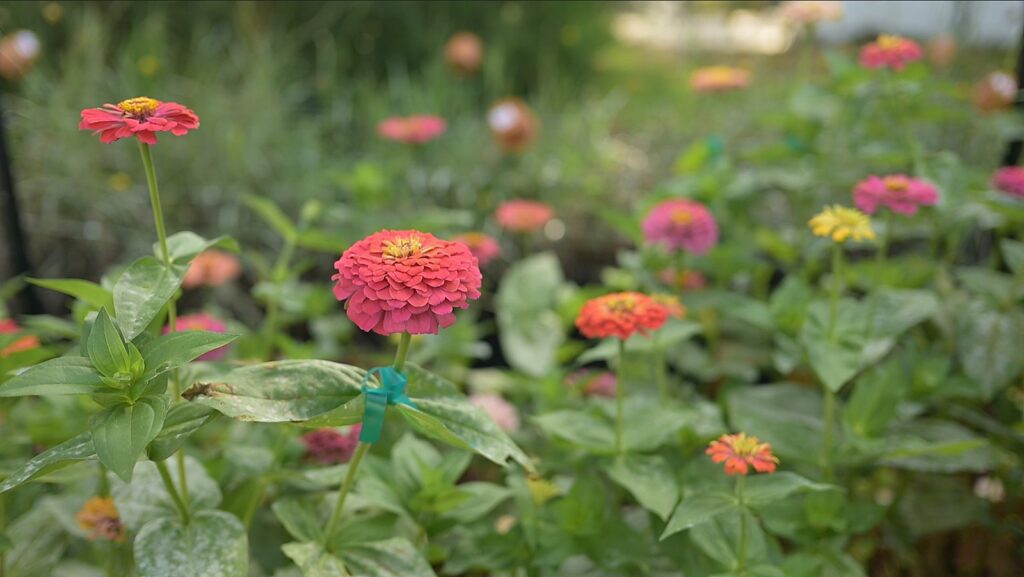
This year I grew so many zinnias. Like, a ridiculous amount. Most of them are the same ones I come back to every summer because they work for the bouquets I sell at my roadside stand: the Queen Lime types in orange, red, and even green.
But one of my beds this year is something special. It’s full of zinnias I grew from seed I saved two years ago, from a Johnny’s mix “Aurora”. Some of those flowers came out so pretty I literally said “my goodness” out loud to nobody. Some came out in a salmon color I’m just not into.
That’s the whole reason I’m sharing how to save zinnia seeds my way. It’s not fancy, it’s not a lab experiment, and I garden in zone 6, central Indiana, so I’m working with real fall weather here. It’s just what works for me in my little urban garden.
Which zinnias should you save seeds from?
Only the ones you love. I know that sounds obvious, but hear me out.
If I look at a bloom today and I’m not crazy about it, there’s no point saving its seeds. Its babies are more than likely going to come up in a color I don’t like either. So I hold two flowers side by side in the sun, pick the one I prefer, and that’s my answer.
My favorites from this bed were a dark purple with orange, a smaller deep orange that looks almost unreal, and one huge, flat, layered bloom with a dark purple and yellow [check] color that was bigger than my hand. There was also one giving me total ballerina vibes, with purple, salmon, and a yellow center.
How do I mark the blooms I want to save?
With a piece of string. That’s it. That’s the trick.
When a bloom is at its prettiest, I tie a little string around the stem, nice and tight. A few weeks later, when every head in the bed is brown and they all look the same, I know exactly which ones were my favorites.
When are zinnia seeds ready to harvest?
I wait until the bloom is completely brown and crispy, still on the plant. Not kind of dry. Done.
I know a lot of people cut the blooms while they still look nice and let them dry indoors. I’ve honestly never tried that, so I can’t tell you how it goes. If I’m in a pinch I might grab a head a little earlier than I’d like, but my default is to let the plant do the work.
Also, saving seed isn’t only a fall job. I do it whenever the blooms are ready.
How to save zinnia seeds, step by step
- Mark your favorites with string while they’re blooming.
- Wait until those heads are fully brown and crispy on the plant.
- Snip the spent heads and drop them into a brown paper bag (These are the ones I use)
- Store the bag until you’re ready to deal with it. For me that’s winter.
- Open the heads on a dry day. Moisture is not your friend here.
- Separate the seeds from the dried petals and plant bits.
- Keep the best looking seeds and toss the empty ones.
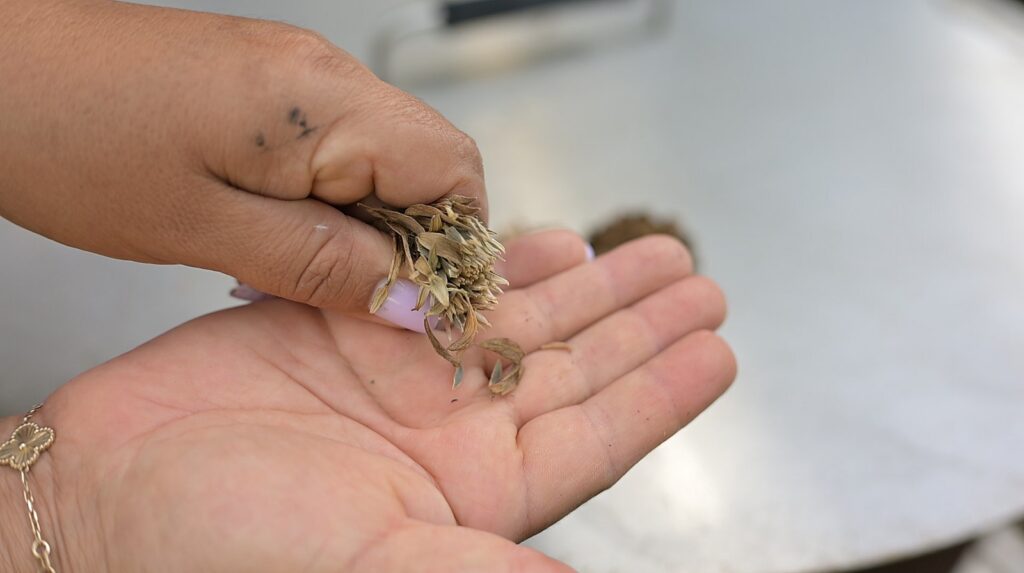
Step 6 is my favorite part, honestly. I sit inside where it’s warm, probably with a show on, and just pick through everything.
| What I use | Why |
|---|---|
| A piece of string | Marks the blooms I want to save |
| Brown paper bags | Holds the dry heads until winter |
How can you tell if a zinnia seed is good?
Feel it. A good zinnia seed is hard and strong. If you move it around and it bends easily, it’s empty, and it’s not going to grow.
The harder the seed feels, the better the chance it germinates. When you pull a head apart, the good seed is the firm part at the base of each petal. If all you find is dry, papery petal with an empty pocket where the seed should be, there’s nothing there.
You’ll also notice some heads are full on one side and totally bare on the other. That’s not a bad flower. That’s the birds. They got there before you did.
One single bloom can give you tons of seeds, so don’t stress if a few heads are picked clean.
Will saved zinnia seeds grow true next year?
Maybe, maybe not. The bees do whatever they want, so your saved seeds can come up in different colors and shapes than the flower you took them from.
I’m okay with that. I’m starting with blooms I already love, so I’m stacking the odds. And I still buy plenty of new zinnia seeds every year, especially new colors and shapes. Saved seed is just my way of keeping the ones that already made me happy.
Why I leave some zinnias standing all winter
My Queen Red Lime bed went in right after I harvested my garlic the first week of July. Those plants are past their prime now, but they’re staying put until probably next spring.
The longer I wait, the more seeds the birds eat, and I’m totally fine with that once I’ve got what I need. Those dry stems give birds and bugs food and a place to hide through the winter. Messy garden, happy wildlife.
What’s next
Once your seeds are saved, the fun part is starting them in spring. I tested six different potting mixes for seed starting side by side, and you can watch that video here.
If you want to see me walk the beds, pick my favorites, and open up a few heads so you can see full seeds next to empty ones, the full video is right up top.
And if you like hanging out in my little garden, subscribe to Soil and Margaritas on YouTube. 🌼